
WINTER STORM: Staying Safe in Cold Weather
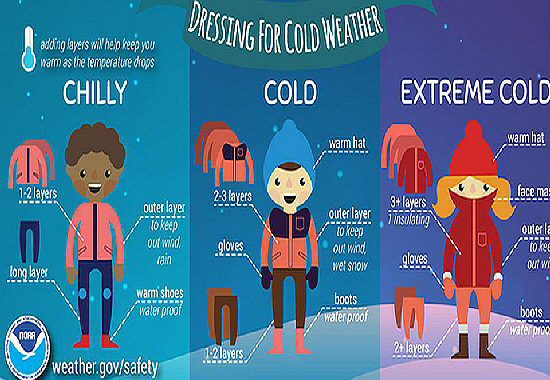
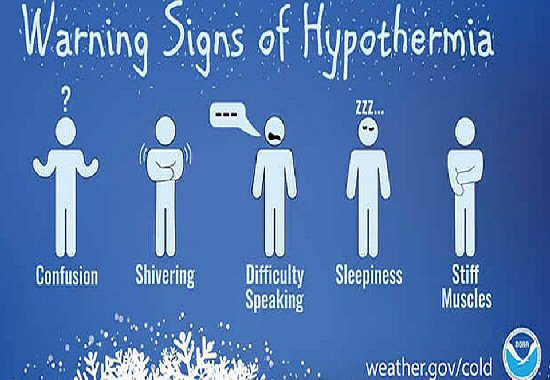

Image courtesy AAA
From weather.gov: Extremely cold air comes every winter into at least part of the country and affects millions of people across the United States. The arctic air can be dangerous. Combined with brisk winds, dangerously cold wind chill values can result.
Be prepared before the cold weather arrives. Winterize your home, prepare a winter car survival kit, fill your gas tank, protect pets, livestock and other property.
Winter Weather Safety Winter Survival Kit
- For your car: Warm clothes, blanket, food, water, cell phone/charger
- For your home: Food, water, medication, flash light, first aid kit
————————————————————–
Extreme Cold Warning vs Watch and Cold Weather Advisory 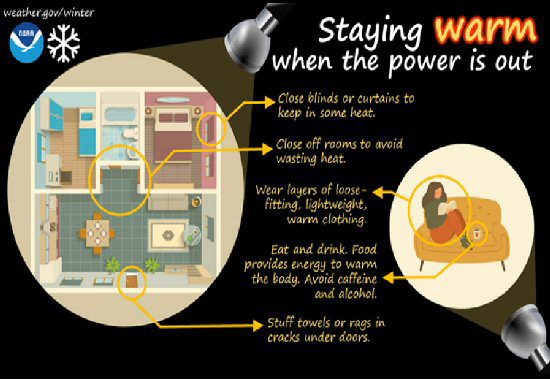
- Extreme Cold Warning: Take Action! An Extreme Cold Warning is issued when extremely dangerous cold conditions or wind chill values are expected or occurring. If you are in an area with an Extreme Cold Warning, avoid going outside. If you have to go outside, dress in layers, cover exposed skin, and make sure at least one other person knows your whereabouts. Update them when you arrive safely at your destination.
- Extreme Cold Watch: Be Prepared. An Extreme Cold Watch is issued when extremely dangerous cold conditions or wind chill values are possible, but the occurrence, location, and/or timing is still uncertain.. As with a Warning, adjust your plans to avoid being outside during the coldest parts of the day. Make sure your car has at least half a tank of gas, and update your winter survival kit.
- Cold Weather Advisory: Be Aware. A Cold Weather Advisory is issued for dangerously cold conditions that are not expected to reach warning criteria. Be sure you and your loved ones dress appropriately and cover exposed skin when venturing outdoors.
People exposed to extreme cold are susceptible to frostbite and can succumb to hypothermia in a matter of minutes. Areas most prone to frostbite are uncovered skin and the extremities, such as hands and feet. Hypothermia occurs when the body loses heat faster than it can produce it.
Cold weather can also affect crops. In late spring or early fall, cold air outbreaks can damage or kill produce for farmers, as well as residential plants and flowers. A freeze occurs when the temperature drops below 32°F. Freezes and their effects are significant during the growing season. Frost develops on clear, calm nights and can occur when the air temperature is in the mid-30s. Each plant species has a different tolerance to cold temperatures. You may also want to check out our winter safety site for snow and more cold season hazards information.
What to do when the temperatures begin to warm up: Check your pipes, refill supplies, shovel/salt walks and driveway, check on family and neighbors.