
AAA Warns Drowsy Driving Deaths Spike After Daylight Saving Time Shift
With Daylight Saving Time set to begin Sunday, AAA is warning drivers about the dangers of drowsy driving. The AAA Foundation for Traffic Safety says fatigue may contribute to up to 10 times more fatal crashes than official statistics show. Studies also indicate fatal crashes increase about 6% nationwide in the week following the time change, partly due to sleep loss and disruption to the body’s internal clock. Research also suggests many drivers underestimate how tired they are behind the wheel. Safety officials recommend getting at least seven hours of sleep before driving, taking regular breaks, avoiding alcohol, and pulling over if you begin to feel drowsy.
Additional Information from AAA:
With Daylight Saving Time (DST) set to rob drivers of an hour of sleep this Sunday, AAA is warning motorists about a hidden danger: drowsy driving contributes to far more fatal crashes than official statistics show, up to 10 times more, according to the AAA Foundation for Traffic Safety. The loss of sleep and darker morning hours make the days immediately after the time change especially risky.
Additionally, in the week following the change to DST fatal crashes increase 6% in the U.S., according to a study by the University of Colorado Boulder. This rise in crashes, particularly fatal ones, is linked to factors such as sleep deprivation and disruption to the body’s internal clock.
According to the AAA Foundation for Traffic Safety:
These figures are far higher than official government statistics, highlighting the underreported nature of drowsy driving crashes. According to NHTSA, there is agreement across the traffic safety, sleep science, and public health communities that the impact of drowsy driving is underestimated.
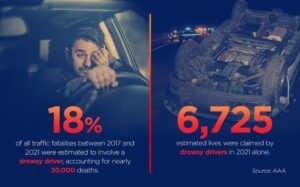
The AAA Foundation’s study, based on in-depth crash investigations and national fatal crash data, estimates that drowsy driving is a factor in roughly ten times as many traffic fatalities as traditional crash data indicates. In fact, one third of crashes involving a drowsy driver result in injuries, and more than 17% of fatal crashes involve driver fatigue, according to the AAA Foundation for Traffic Safety.
Many fatigued drivers aren’t even aware of the risk. In another simulation study conducted by the Foundation, 75% of drivers who rated their drowsiness as low were actually moderately or severely drowsy.
In its most recent Traffic Safety Culture Index, the AAA Foundation noted drivers predominately perceive drowsy driving to be dangerous (93%), however one-quarter (25%) of drivers admit to having engaged in the behavior in the past 30 days.
“Drowsy driving is a far bigger safety threat than most people realize,” said Jana Tidwell, spokesperson for AAA Club Alliance. “Losing even a single hour of sleep during the switch to Daylight Saving Time can leave drivers more impaired than they think. As we ‘spring ahead,’ it’s critical for motorists to prioritize rest and be alert to the added risks on the roads this week.”
Drowsiness impairs drivers in several ways:
- Reduced alertness: Makes it harder to react quickly to hazards. Just one hour less than the expert-recommended minimum of 7 hours of sleep increases a driver’s risk of crashing.
- Impaired judgment: Increases the risk of making poor decisions on the road. Sleep deprivation increases a driver’s risk of making many ordinary mistakes, leading to crashes. Those deprived of sleep by 4+ hours have an impairment similar to those over the legal BAC limit.
- Hazardous Microsleeps: Can cause momentary lapses in consciousness, leading to loss of control of the vehicle and failure to respond to dangers on the road.
- Self-Perception of Drowsiness: Previous Foundation research found that drivers often underestimate their drowsiness, putting themselves and others at risk.
So, what can you do to stay safe on the road?
- Get enough sleep before driving. Aim for at least seven hours of sleep per night.
- Travel at times of the day when you are normally awake. Avoid driving when you are tired or sleepy.
- Take breaks every two hours or 100 miles. Get out of the car, stretch your legs, and get fresh air. Plan and identify safe, comfortable places to take breaks. Don’t wait until you’re already feeling drowsy.
- Avoid heavy meals before driving. Eating a large meal can make you feel tired and sluggish.
- Avoid alcohol and drugs. Both can impair your driving ability. Besides harming driving directly, they can also amplify drowsiness.
- Listen to your body. If you start to feel tired, pull over and take a break. Don’t try to push through it.
- Travel with an alert passenger and take turns driving. Sharing the driving can help you stay awake and alert.
- Don’t underestimate the power of a quick nap. A 20- to 30-minute nap can significantly improve your alertness.
AAA supports the development of vehicle technology that can detect drowsiness and prevent drivers from operating a vehicle when impaired. This technology could help to save lives by preventing drowsy driving crashes.
About the AAA Foundation
Established in 1947 by AAA, the Foundation for Traffic Safety is a nonprofit, publicly funded 501(c)(3) charitable research and educational organization. The AAA Foundation’s mission is to prevent traffic deaths and injuries by researching their causes and by educating the public about strategies to prevent crashes and reduce injuries when they do occur. This research informs the development of educational materials for drivers, pedestrians, bicyclists, and other road users.